Last updated: October 11, 2026
Key Takeaways
- Choose the tool that matches your language control needs, not the amount of automation.
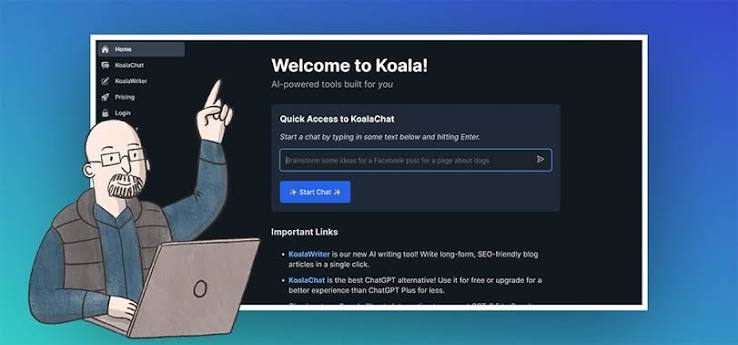
- KoalaWriter is simple, but multilingual briefs raise the editing burden quickly.
- Surfer AI fits SEO-led pages that need search structure, not just translation.
- Jasper works well when SEO is part of a larger multilingual content system.
Quick Answer: for KoalaWriter alternatives for non-English SEO content, the best choice depends on workflow, but Surfer AI is the strongest SEO-first option for 1+ target languages. KoalaWriter is useful for fast English drafts, but non-English SEO is where many AI writing tools start to wobble. Honestly, I’d pick based on language quality, SEO controls, and local search intent — not on how fast the thing spits out words. If I needed content that ranks in Spanish, French, German, or another market with real editorial standards, that would be my filter.
I write about SEO tooling and multilingual content strategy, so I look at the parts that usually crack first: idiom, entity naming, SERP fit, and whether the tool can support an editor who still has to review every line. In practice, that means checking whether the tool can handle 1 market or 5; it also means asking whether the team has 1 fluent reviewer or several. The gap shows up fast.
Which KoalaWriter alternative is actually right for non-English SEO?
The right alternative depends on how much control you need over the language, not how much automation you want. Need a strong mix of multilingual output and SEO workflow? Surfer AI is the clearest upgrade path. If cheaper volume matters more and built-in SEO guidance is less important, Writesonic or Jasper can fit better. For long-form structure in multiple languages, ChatGPT or Claude paired with your own SEO brief is often the smarter choice.
One mistake keeps coming up: treating “supports multiple languages” as if it meant “works for non-English SEO.” Those are not the same thing. A tool can generate passable Spanish and still miss local search phrasing, grammar in marked regions, or the terms actual users type in Mexico versus Spain. That difference bites ranking hard, so consult a professional linguist or SEO specialist before publishing. See Google Search Central’s guidance on localized content and language targeting: https://developers.google.com/search/docs/specialty/international/localized-versions
English-first models can also sound off in subtler ways. German can turn calque-heavy, French can get stiff, and Portuguese may feel translated instead of written. Search engines tolerate some AI texture; readers usually do not.
The honest side-by-side: KoalaWriter vs the main alternatives
KoalaWriter keeps things simple. That is its real selling point. Once the brief turns multilingual and the editorial bar rises, though, it loses ground quickly. I’d keep it in the “fast English blog drafts” bucket, not the “serious non-English SEO” bucket.
| Criteria | KoalaWriter | Surfer AI | Jasper | ChatGPT / Claude | Winner for this condition |
|---|---|---|---|---|---|
| Multilingual draft quality | Adequate for some languages, but uneven in nuance | Stronger when paired with on-page SEO guidance | Good for marketing copy; can still feel templated | Best when you can guide tone and terminology carefully | Localized editorial control |
| SEO guidance inside the workflow | Basic compared with SEO-first tools | Strong, with content guidance built in | Moderate | Depends on the prompt and your process | SEO-led content teams |
| Ease of use for non-specialists | Simple | More opinionated | Fairly easy | Requires more skill | Small teams needing speed |
| Long-form structure | Good for drafts | Strong for SERP-driven outlines | Good | Very flexible | Detailed briefs and complex topics |
| Brand voice consistency | Decent, but can blur across languages | Better if the workflow is disciplined | Strong for campaigns | Strong with reusable instructions | Multi-brand marketing teams |
| Local search intent handling | Limited unless you bring your own research | Better because the workflow centers SEO | Mixed | Strong only if the writer understands the market | Country-specific SEO |
| Editing burden | Moderate to high in non-English work | Lower, but still real | Moderate | Can be high without a strong prompt | Lean editorial teams |
| Best use case | Quick English or light multilingual drafts | SEO articles that must align with search intent | Cross-channel marketing content | Custom multilingual content with human oversight | Serious multilingual publishing |
| Typical weakness | Generic phrasing and weaker localization | Can feel locked into its process | Sometimes writes like a campaign system, not an editor | Quality swings with prompting | Users who need predictable polish |
KoalaWriter lowers friction; that is the upside. The catch is that non-English SEO needs more than friction reduction. You need local phrasing, proper keyword placement, and a model that can keep tone steady across a 1,000-word article. When that slips, you do not just get “meh” copy. You get text that sounds translated, and trust drops off a cliff.
Surfer AI fits pages where on-page SEO matters more than raw drafting speed. Jasper makes more sense when the same team also needs ads, emails, and landing pages in several languages. ChatGPT and Claude work best when the process is editorially serious and the prompt includes audience, market, intent, glossary, and do-not-use terms.
Surfer AI: the strongest choice for SEO-first multilingual pages
Surfer AI is a strong fit when the page must compete in search, not merely exist in the target language. Its edge is not prettier prose. Its edge is a workflow built around search intent, topical coverage, and page structure — exactly where non-English SEO content tends to fall apart.
That matters because multilingual SEO is rarely a pure translation job. A Spanish article targeting “mejor CRM para pequeñas empresas” needs more than Spanish words. It needs the right subtopics, the right comparative framing, and the terminology that fits the country and buyer stage. Surfer AI is more useful than KoalaWriter here because it keeps the SEO shape in view while drafting.
The drawback is plain: it is less freeform. That can be annoying if you want a loose creative draft. I would not choose it for opinion pieces, brand essays, or content that needs a distinctly human literary voice. And if your topical model is already mature, the system can feel like wearing a suit that’s tailored for someone else.
Surfer AI is the right pick for in-house SEO teams, agencies, and site owners publishing in one or more non-English markets who care about rankings first and stylistic elegance second. If your work requires a 100% native-sounding voice with heavy storytelling, I’d look elsewhere.
Jasper: best when the team needs multilingual marketing copy too
Jasper wins when the SEO article is only one piece of a broader multilingual content system. If the same team also has to produce emails, product pages, social copy, and campaign assets in several languages, Jasper is the more practical platform than KoalaWriter because it is built for repeatable brand output across formats.
Consistency is its strongest point. That matters in non-English work, where tone drift can get expensive. A brand that sounds formal on the blog and casual on the landing page may be fine in English, but in German or Japanese the mismatch can read as careless. Jasper gives teams a better shot at keeping one voice across channels, especially when there are templates and reusable instructions.
The weakness? It is not automatically an SEO specialist. If I were trying to rank a Polish or Italian article, I would still need a good brief, a keyword map, and a human editor who understands the market. Without that, Jasper can produce polished but generic marketing language — clean on the surface, thin underneath.
Jasper is not my first choice for a solo publisher whose only goal is to crank out localized SEO articles. It fits marketing teams that need multilingual output across formats and can afford some editorial supervision. If the only thing you want is search content in one foreign language, Jasper may be more platform than you need.
ChatGPT or Claude: best for control, worst for beginners
ChatGPT and Claude are the strongest choices when you already know what the article should say and you need the model to execute in the target language with precision. They are not “one-click” replacements for KoalaWriter. Think of them instead as writing engines that can beat specialized tools if the prompt, glossary, and review process are strong enough.
I would choose this route for complex markets, technical topics, or pages where terminology matters more than template convenience. For example, a finance, health, or B2B article in French or German often needs tighter control over terminology than a general-purpose SEO tool provides. The model can follow a detailed brief, preserve brand voice, and adapt to country-specific terminology — but only if the writer supplies the structure.
The weakness is the learning curve. Beginners often ask too little, then blame the model when the output sounds bland. Non-English SEO with these tools needs more setup: target audience, locale, search intent, preferred spellings, banned phrases, internal style rules, and examples of the tone you want. Without that, quality swings too much.
This is the route I’d recommend to experienced editors, in-house content strategists, and agencies with a real localization workflow. It is not the right choice for someone who wants a press-button blog factory. It also fails fast if the person managing content cannot spot weak phrasing.
The practical recommendation by use case
Choose Surfer AI if your main goal is ranking pages in a non-English market and you want the tool to help with topical completeness. Choose Jasper if the work spans SEO, landing pages, and broader marketing content in several languages. Choose ChatGPT or Claude if you need the most control over tone, terminology, and market-specific wording. Keep KoalaWriter only if you want quick drafts and can tolerate more editing in exchange for simplicity.
That is the short answer, but the real decision comes down to your workflow. If a native reviewer will fix every article anyway, a flexible model may beat a more guided SEO tool. If no one has time to edit, the tool has to carry more of the load; then Surfer AI becomes more attractive. When your team writes in three or more languages and needs consistency more than clever prose, Jasper or a custom prompt system becomes easier to manage.
The question is not “Which tool writes in French?” The real question is “Which tool helps me publish search content that a French reader will trust?”
When I would reconsider the choice entirely
I would step back from all of these tools if the market is small, regulated, or highly localized. In those cases, the safest path is often human translation or transcreation with AI only as a draft helper.
Three situations flip the verdict:
- Highly regulated topics. For medical, financial, or legal content, the cost of a bad translation is too high. AI can assist, but it should not be the final author without expert review.
- Very small language markets. If the target language has fewer available training examples or highly specific regional usage, generic AI output can miss the mark more often.
- Local search intent is the whole game. If the page depends on country-specific queries, product naming, or local idiom, a native SEO specialist may outperform any tool.
- The brand voice is unusually strict. Luxury, editorial, or thought-leadership brands often need a human writer to hold tone across languages.
In those cases, the tool choice matters less than the editorial process. I would rather have a slower workflow with strong review than a fast one that publishes awkward language.
Can KoalaWriter still work for non-English SEO?
Yes, but only for straightforward drafts and only when a human editor is willing to do real cleanup. KoalaWriter can still be useful if the article is low-risk, the language is close to your team’s strongest language, and you already have a solid keyword brief. The moment you need region-specific phrasing, technical precision, or a more native voice, its limits show up.
That is why I would not call it the best default for KoalaWriter alternatives for non-English SEO content. It is a convenience tool first. The alternatives above are better when ranking, localization, and editorial quality all matter at once.
What is the best KoalaWriter alternative for multilingual SEO?
Surfer AI is the best all-around choice for SEO-led multilingual pages, Jasper is the best for broader brand content across languages, and ChatGPT or Claude is the best for teams that can guide the process closely. KoalaWriter is still fine for quick drafts, but it is not the strongest option when the content must read native and compete in search.
FAQ
Is translation enough for non-English SEO content?
No. Translation can preserve meaning, but SEO content also needs local search phrasing, intent matching, and natural terminology for the target market.
Do AI writing tools handle every language equally well?
No. Quality varies by language, topic, and prompt quality. Major European languages usually fare better than smaller or more specialized language markets.
Should I publish AI-generated non-English content without editing?
I would not. At minimum, a fluent reviewer should check grammar, tone, terminology, and keyword placement.
Is one tool enough for all languages and content types?
Usually not. A tool that works for blog posts may not be ideal for landing pages, product copy, or regulated content.
What should I prioritize first when choosing a tool?
Prioritize language quality, SEO workflow, and the amount of human editing your team can realistically do.
Drafted with AI; not yet reviewed by a person.