Last updated: October 21, 2026
Key Takeaways
- An editorial QA alternative should make verification easier, not just writing faster.
- You fact-check AI content by checking each claim against a primary source, then logging what passed and failed before publish.
- The best KoalaWriter alternatives for editorial QA are tools that support source review and structured editing, not just first-draft speed.
- An editorial QA checklist should cover source verification, citation review, tone checks, and a final hallucination scan in under 15 steps.
First published 13 October 2026.
In short: if KoalaWriter is doing the first draft, the alternatives worth looking at for editorial QA and fact-checking are the tools and workflows that help a human editor verify sources, spot hallucinations, check citations, and enforce editorial standards before publication. That means choosing software for review, not generation. It also means accepting a hard truth: no AI editor can replace source documents, editorial guidelines, or a disciplined fact-checking checklist. For broader context on KoalaWriter alternatives for editorial QA and fact-checking, this guide stays focused on the review stage rather than drafting.
What an editorial QA alternative needs to do

An editorial QA alternative needs to make verification easier, not just writing faster. That matters because the review stage has a different job from drafting. A good editor is checking whether an AI draft matches the source documents, follows editorial guidelines, and uses citations correctly. If a tool only helps generate text, it is aimed at the wrong problem. For background on editorial standards, see the Reuters Handbook of Journalism and the Associated Press Stylebook.
The practical test is simple: can the tool help a reviewer compare claims against a source pack, flag unsupported statements, and keep a record of what was checked? If not, it is not an editorial QA tool. It may be a drafting tool, a briefs tool, or a collaboration tool, but it will not solve the review bottleneck.
This is where many generic “KoalaWriter alternatives” articles go wrong. They treat every writing app as if it served the same stage of the workflow. It does not. Editorial QA has its own needs: source verification, citation review, hallucination checks, style enforcement, and a repeatable sign-off process. A better fit is usually the tool that reduces uncertainty at the exact point where a draft is about to be published.
A useful alternative usually sits alongside a 3-part process:
- AI draft created from a brief.
- Editor reviews against source documents.
- Final pass checks citations, tone, and house style.
If a tool cannot support that handoff, it will not save time in production. It may even create more work, because someone still has to re-check every factual claim manually.
How do I fact-check AI content?
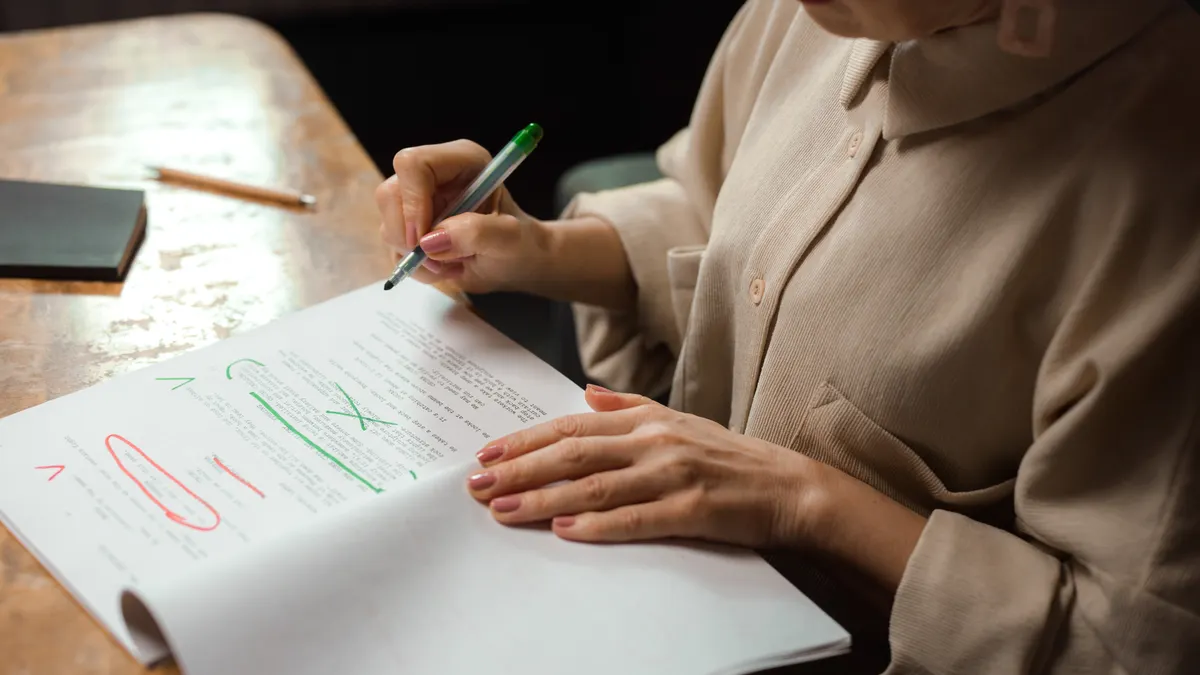
You fact-check AI content by checking each claim against a primary source, then recording what passed and what failed in a checklist before the draft moves to publish. The fastest version of that process is not a vague read-through; it is a line-by-line review with source documents open beside the draft.
A workable editorial QA pass usually follows this order:
- Split the draft into claims. Mark every factual sentence, statistic, product name, date, definition, and recommendation. A 1,200-word article can easily contain 25 to 40 checkable claims.
- Match each claim to a source document. Use the original report, client note, product page, interview transcript, or house style sheet. If the claim has no matching source, treat it as unverified.
- Check citation placement. Make sure the cited source actually supports the sentence it sits beside, not just the topic of the paragraph.
- Look for hallucination patterns. These usually show up as invented comparisons, inflated certainty, or specific numbers with no origin. A statement like “the tool increases accuracy” is weak unless the source documents show how accuracy was measured.
- Log the decision. A simple pass/fail note in a 10-item checklist is enough. The result should be obvious to a second editor without reading the whole draft again.
The tools that help most here are rarely the tools that generate the draft. They are the ones that make the review faster: document comparison, comment threads, version history, and citation tracking. If you are choosing between alternatives, ask whether the software helps you check 1 article or 100 the same way. Consistency matters more than flash. For a public standard on reliable reporting, the Society of Professional Journalists’ Code of Ethics is a useful reference.
A serious limitation: no software can prove a claim is true if the source is weak. If the source pack is thin, the QA process will still catch problems, but it cannot invent evidence. That is why the best editorial QA workflows start with source quality, not software features.
Which KoalaWriter alternatives fit editorial QA best?

The best KoalaWriter alternatives for editorial QA are the tools that support source review and structured editing, not the ones that only speed up first drafts. In practice, that means platforms with strong commenting, version control, citation handling, or document comparison. The right choice depends on whether the bottleneck is verification, sign-off, or cleanup.
Here is the honest trade-off against the obvious drafting-first alternative:
- If you need source-by-source verification, choose a workflow that keeps source documents visible and easy to cross-reference. This favors review-centric editors and knowledge-base tools.
- If you need citation cleanup, pick software that makes it easy to see where links, quotes, and references came from. A citation problem is easier to catch when it is attached to the sentence.
- If you need editorial standards enforced, use a tool that can hold a style guide, checklist, or template in the workflow. That is more useful than another AI prompt box.
- If you need final human approval, choose tools with a clear review trail. The audit path matters when several people touch the same 800-word piece.
This page is not the place to compare every AI writer on the market. That would blur the line between drafting and review, and the line matters. The better question is: which tool reduces the time it takes to check an AI draft without weakening editorial control?
One useful mental model is to divide the market into 3 categories:
- Drafting tools that generate a first pass.
- Review tools that make it easier to fact-check and edit.
- Workflow tools that move a draft through approval.
KoalaWriter sits closer to category 1. If your pain is in category 2, a drafting-first product is the wrong benchmark. That is why an editorial QA workflow often includes a document editor, a citation checker, and a checklist more than it includes another writing generator.
What should an editorial QA checklist include?
An editorial QA checklist should include source verification, citation review, tone checks, and a final hallucination scan in under 15 steps. The goal is not to make the checklist long; it is to make it repeatable enough that a second editor would reach the same verdict.
A practical checklist usually covers these items:
- Every factual claim has a source.
- Source documents are current and relevant.
- Quotes are exact and attributed.
- Links point to the right page, not a homepage.
- Numbers are copied correctly.
- Brand names and product names are spelled the way the source uses them.
- Claims that sound promotional are either supported or removed.
- Style guide rules are followed.
- No sentence depends on an unverified AI assumption.
- The final version matches the approved draft.
That list works because it separates editorial standards from creative writing. A draft can be lively and still fail QA if one claim is unsupported. It can also be dull and still be ready to publish if the evidence is solid.
The common mistake is to use one checklist for every content type. A 500-word news update, a 2,000-word product page, and a technical explainer do not need the same review depth. A product page may need line-level citation checks, while a routine update may only need spot checks on the lead, subheads, and any figures. A 5-minute checklist is fine for low-risk copy. A 30-minute checklist is safer for high-visibility content.
The cost of skipping this step is editorial rework, slower approvals, and more time spent fixing trust after publication. The fix is boring but effective: make the checklist visible, mandatory, and short enough that editors will actually use it.
Where citation review breaks down in AI drafts
Citation review breaks down when the draft has references but not real support. A linked source is not the same thing as a verified source, and that gap is where many AI drafts fail.
The most common problems are easy to spot once you know what to look for:
- Citation drift. The source is related to the topic but does not support the specific sentence.
- Citation laundering. The draft cites a secondary source that itself does not show the original evidence.
- Orphan claims. A sentence sounds factual but has no citation at all.
- False precision. The draft includes a specific number or date that does not appear in the source.
- Stale support. The cited source is old enough that the claim may no longer be true.
A useful editorial QA system makes these failures visible. Some teams do that with comments and tracked changes inside a document editor. Others do it with a structured fact-check sheet that lists claim, source, verdict, and notes in four columns. A 4-column sheet is crude, but it works because it forces the editor to state whether the citation actually proves the claim.
This is also where source documents matter more than AI output. If a draft cites a blog post when the source is a product spec, the review process gets messy fast. Good QA starts with the strongest available source, then works outward only when needed.
The honest drawback: citation review takes time, and there is no shortcut that removes the need for judgment. Software can speed up retrieval and comparison, but a human still has to decide whether the evidence is enough. That is exactly why the best alternatives for editorial QA are review tools, not generators.
Which workflow is right if the draft is already written?
If the draft is already written, the right workflow is a source-led review pass followed by a standards check, not another round of AI generation. That matters because rewriting a draft before verifying it can hide the original problem instead of fixing it.
A solid post-draft workflow looks like this:
- Open the AI draft and the source documents side by side.
- Run a first pass for factual claims and unsupported statements.
- Run a second pass for citations, links, and quote accuracy.
- Run a final pass for editorial standards: tone, structure, terminology, and house style.
- Save the reviewed version and note any unresolved questions.
That sequence works well when the article is already fairly close to publishable. It is weaker when the draft is badly off-topic, because then review becomes repair work. If the draft needs substantial restructuring, you may spend less time starting over than trying to salvage it.
This is the biggest trade-off against the obvious alternative of using a drafting tool to “fix” the article. Drafting tools are good at producing text. They are much less reliable as fact-checkers. If the goal is editorial QA, the winning setup is usually a strong review environment plus a simple source checklist, not a more aggressive AI writer.
A final point for buyers: do not choose based on a feature list alone. A 20-feature product that nobody uses for review is less valuable than a modest editor with clean comments, clear history, and easy source handling. Editorial QA succeeds when the workflow is visible and boring. That is a feature, not a flaw.
If you need the broader comparison context, the hub page on KoalaWriter alternatives belongs upstream of this guide; this article stays on the review stage only.
How do I fact-check ai content?
Fact-check AI content by breaking it into individual claims, checking each one against a source document, and recording the result in a checklist. The fastest workflow is usually claim-by-claim review in a 4-column sheet: claim, source, verdict, and notes. That keeps unsupported statements from slipping through just because the draft reads smoothly.
How do I review ai drafts before publishing?
Review AI drafts before publishing by checking source accuracy, citation placement, and editorial standards in that order. The first pass should catch unsupported facts, the second should confirm links and references, and the last should check tone, terminology, and formatting. A 10-item checklist is often enough for routine content.
How do I create an editorial qa checklist?
Create an editorial QA checklist by listing the exact checks your publication will always require, then trimming it to the shortest version that still catches errors. Start with sources, citations, quotes, numbers, tone, and final approval. If the list goes past 15 items, split it by content type so editors do not ignore it.
Drafted with AI; not yet reviewed by a person.